Rethinking the US Army
Interesting article by Peter Spiegel and Julian E. Barnes of the Los Angeles Times.
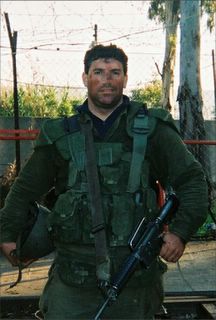
Although it is vital for us to rethink the US Army, I would be concerned about the consequences of creating a force that, according to the quote from Lt. General Caldwell, “…do not do direct action, they do not command and control combat forces, they are not a combat force….” The IDF doesn’t get everything right and it’s not exactly an apples-to-apples comparison, but the primary urban warfare training cadre that provides the initial instruction to all Israeli special forces/operations units also conducts operations on a regular basis to keep skills sharp and curriculum relevant.
This is an expression of an Israeli training methodology that typically integrates real-world experience with instruction. For example, by the first month of basic training, soldiers conduct low-probability-of-contact operations - such as patrols, manning checkpoints, and reconnaissance on relatively pacified villages. This is meant to gradually prepare soldiers for more complex operations and speed integration of newly acquired skills. You practice navigation and surveillance techniques on base during the day and conduct short-range reconnaissance at night.
I agree with Col. Nagl’s assessment that being a trainer/advisor “…requires a different mindset.” As we all know, the best sniper doesn’t always make the best shooting instructor. Being a great trainer requires a set of interpersonal and organizational skills that are independent of subject matter expertise. Teaching an individual to shoot, orienteer, employ communication equipment, and make a tourniquet can be taught well by people with limited field experience. In Israel, female soldiers without combat experience train soldiers on tanks, mortars, and sniping techniques. But you can’t fully instruct or evaluate skills like patrolling, manning checkpoints, counter-IED measures, and CQC in a training facility alone. People who are great at target selection during simulations are not necessarily the most reliable members of a team when in the field because, as we all know, there is a big difference between on-base exercises/simulations and real-world operations - in terms of complexity/psychological pressure and how an individual responds to it. For this reason, a trainer/advisor needs to provide insights, support, and evaluate the competency of commanders and individual soldiers in the field.
Another concerning thought that surfaced in the article was the idea, as stated by Col. Nagl, that “We don't want to do the fighting; we want our friends to do the fighting.” I don’t diminish the genuine importance of having local partners who are able to stand up on their own and assert control/authority over their territory. And believe creating a mechanism to quickly train/stand-up/buttress a local partner is of vital importance to current and future conflicts. That said, US military forces are still going to take a leading role in ensuring public security and defeating threats in most current and future conflicts - at least for an extended period of time while a local partner is trained up (we can’t assume that we’re going to have the capability or foresight to train up these local partners in time to forestall an outbreak of violence). For this reason, even if we were to establish a force dedicated to the training of US partners, it would not change the need to make other changes to force structure, leadership development, training methods, training curriculum, strategies, etc that will enable the US military to become even more effective practitioners of COIN and asymmetric warfare.
Perhaps I’m giving these sentiments, as expressed by Col Nagl, more weight than he intended, but thinking that the US military will forestall conflict and/or empower weak states primarily by training up local forces minimizes the complexity of most any future conflict we’re likely to encounter.
For example, even if we successfully cycle hundreds of thousands of local Iraqis through a highly improved training regimen and give them the highest rating in terms of ability to conduct a wide range of operations that ensure public safety, it does not necessarily follow that the Iraqi government will use this military force in an ethnically neutral way that promotes national unity, undercuts sectarian strife, diminishes the negative influences of countries like Iran, or changes the perception of the US as an occupying power that exerts undue influence over Iraq.
Certainly, improved US training capabilities will increase the military capabilities and professionalism of partners, but that does not necessarily mean that they are going to take decisive action. Without the right political framework, clear direction from a central government, and extensive civilian agreement on national priorities, it may not matter how well our partners are trained. As an organization, they still may not perform as we’d expect and like them to in the field because their effectiveness will depend not only on their ability to fight, but also on their legitimacy in the eyes of the civilian population, the political will of civilian leaders, and the belief by individual soldiers/commanders that orders received reflect both personal and national interest.
For that reason, the role of US diplomats, US civil affairs personnel, media, NGOs, etc will continue to play as vital a role as our highly-dedicated trainers/advisors in making sure that a partner’s military reaches the level of professionalism desired and demonstrates a willingness to take on the hard tasks that lead to a desirable political end-state. As a result, the military will still need to acquire new competencies, consider changes to force structure/resource allocation, and dramatically increase the level of “jointness.” Although this may be self-evident, I am a little concerned that the creation of a dedicated training corps is being perceived as a game-changing solution that mitigates the need to make many of the far-reaching changes that have been proposed and studied over the last few years.
For instance, will any new model give equal weight to non-kinetic capabilities - like development, civil affairs, and strategic communications - that are as vital to the successful prosecution of counter-insurgency, nation-building, and/or stability operations as the number of boots on the ground?
In many current and future conflicts, development projects that improve quality of life can be critical to the success of the overall mission. But since these NGOs and development agencies are unable to secure their work environments or personnel, many projects never get implemented. If these projects were considered a critical component of a battle plan or military campaign, the necessary security and logistics required for implementation would be more readily available. As long as these non-kinetic elements are not integrated within the overall strategy from the outset and included in operation plans, many of them will not be accomplished. And this could have a negative impact on the mission as a whole. For this reason, it may be incumbent on the US military to either dramatically increase its competency in this area or, at least, better integrate with the NGOs/development organizations during the strategy development and operation planning phases.
That said, Lebanon may be a good laboratory for testing how far the training and arming of a local partner - as the primary role of the US military - can go in helping to establish central authority. With some help, the Lebanese Army recently asserted control over the weakest population segment and succeeded in destroying the infrastructure of a very small militia. In and of itself, this was a big first step for this fractured country. It’s possible that this military, if further strengthened with more arms, training, and direct support, could assert control over more hotly contested territory with larger and more lethal militias like Hezbollah. I’m not sure they could, in the near term, even make the attempt without direct military support from the US, Israel, or an Arab-led coalition. Recent comments by anti-Syrian parliamentarians like Walid Jumblatt and Hariri suggest that the Lebanese believe this to be true. Unlike Iraq, Lebanon (despite the fractured nature of the country and perhaps because of exhaustion after decades of civil war) may have a clear majority of citizens that would welcome a strong, relatively secular government that asserts central control. In this way, Lebanon is not as complex as Iraq. It may just require increasing the capabilities of the existing military, encouraging leaders to continue to publicly resist Syrian/Iranian influence, and position operations as the best path to achieving the national unity that is strongly desired by civilians throughout the country.
In the future, one would expect that there will be a wide range of situations and conflicts that will require the support, if not outright intervention, of the US military. In some cases, like Iraq, the full spectrum of US political, economic, and military levers will be required. Other cases, like Lebanon, may mostly require the supply of additional arms and military training in order to achieve the desired political end-state. And there will be the majority of cases whose requirements will be somewhere in between. For instance, US support for a western-leaning government may take the form of providing logistical support and security for ongoing development projects that are critical to achieving political goals.
Although improving training capabilities is certainly important and valuable, I see it as being only one of several equally important areas where the US military needs to reallocate resources and enable change. And for what it’s worth, I do think that trainers/advisors need to fight alongside their trainees in order to evaluate the relevance of curriculum, measure troop capabilities, provide immediate feedback, and demonstrate support.
Labels: Israeli Military, Transformation, US Military
posted by Adam Harmon at
11:49 PM
0 Comments